
Fashion Week Hit My Algorithm
How one Chanel show turned my spring closet clean-out into a $250,000 wish list and what the online hype is doing to us psychologically

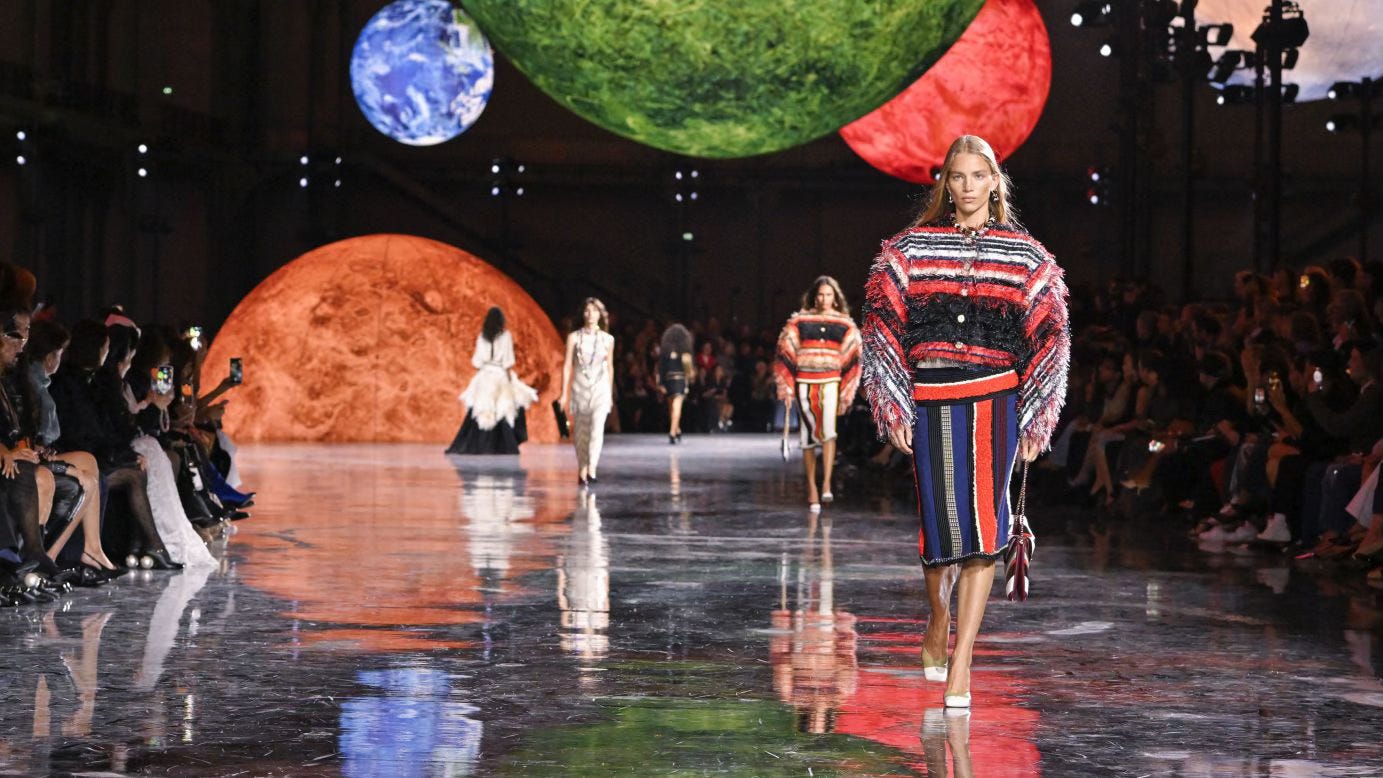
I watched the Chanel show on Instagram this week.
Within an hour, I had mentally built a $250,000 shopping list.
The problem is I wasn’t planning on shopping.
I was actually in the middle of organizing my closet for spring - putting away winter pieces, looking at what I bought and hadn’t worn after a real snowstorm season in New York and Paris.
On an a break I wanted to take a peek at Matthieu Blazy’s first designs.
The shoes and bags were stunning. It’s probably the most exciting thing I’m buzzing about this Paris Fashion Week.
Aside from the new Saint Laurent pumps and lace details. I’m a bodice girl, so Dolce is also up there for me.
Exciting times seeing all the new.
Within about an hour of watching, my entire algorithm changed.
My feed flooded with runway clips, creators discussing their favorite looks, influencers styling pieces, people running to stores, and critics weighing in.
Suddenly my brain was operating in a completely different reality.
In the span of one evening, I had mentally assembled a wish list that could easily reach $250,000.
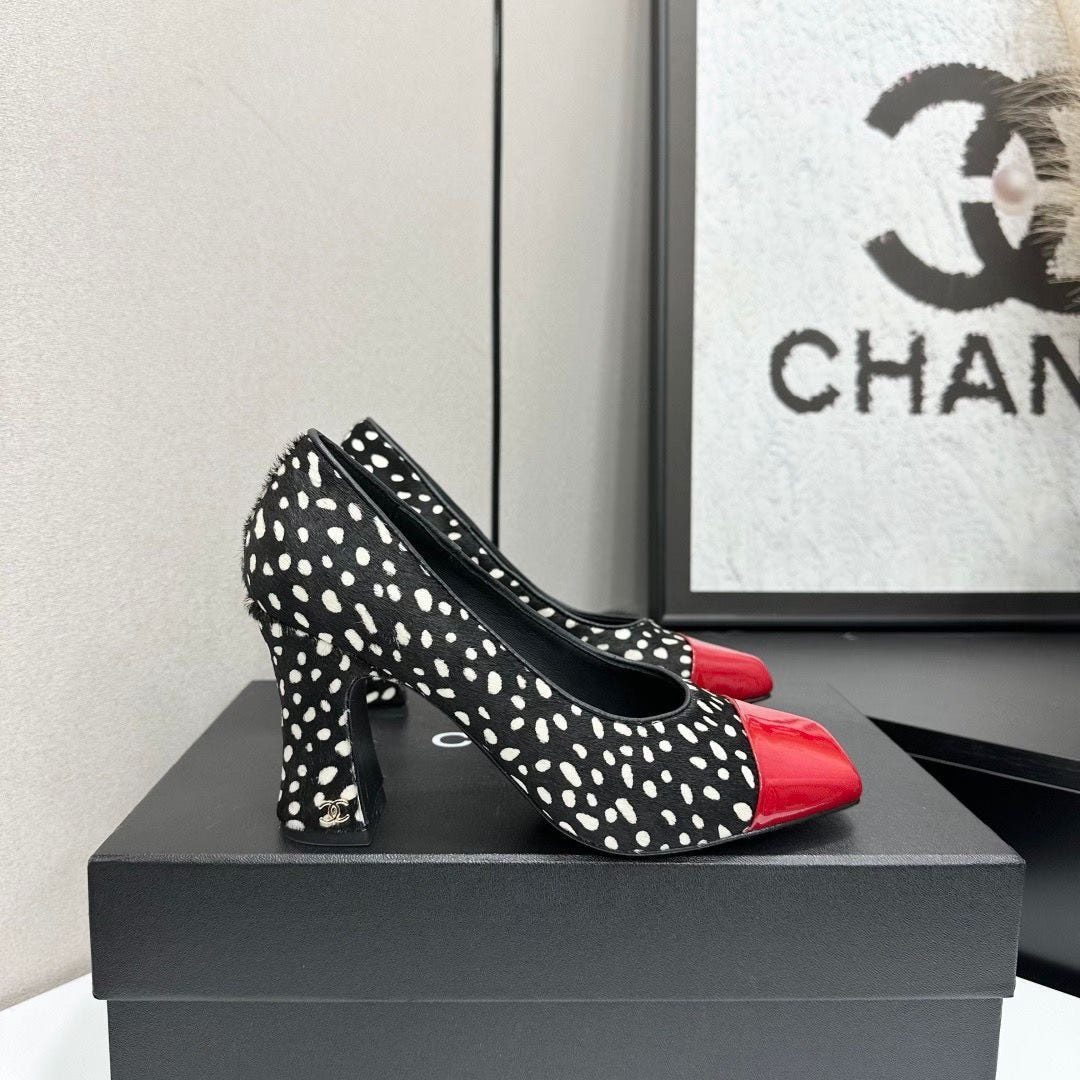
Several Chanel bags. The square-toe block heel pump — specifically the red toe with the black and white deer print.
The new Saint Laurent shoes with the elongated pointed toe. And an insane lace gown for summer travels.
There’s a challenge that comes with seeing all these beautiful new pieces though…
And thats the sense of urgency that comes with them.
I felt like I needed to move quickly if I was going to get my hands on any of it. Maybe everyone was about to buy up all this newness.
And I think that feeling is actually very common.
The problem is that just a few hours earlier, I had been perfectly content.
I was in my element getting my closet ready for spring. I hadn’t even begun sorting what’s staying and what’s going to storage.
I had absolutely not thoughtfully decided these new things served my wardrobe.
But when the entire internet is showing you Fashion Week at the same time, it suddenly feels like something is happening right now — and if you don’t act quickly, you’re late.
As I sat down to write about this today, something almost too perfect happened.
Still in the shopping mindset, I asked my stylist about a Dolce & Gabbana dress I had seen.
The dress was $247,000.
I basically fell over.
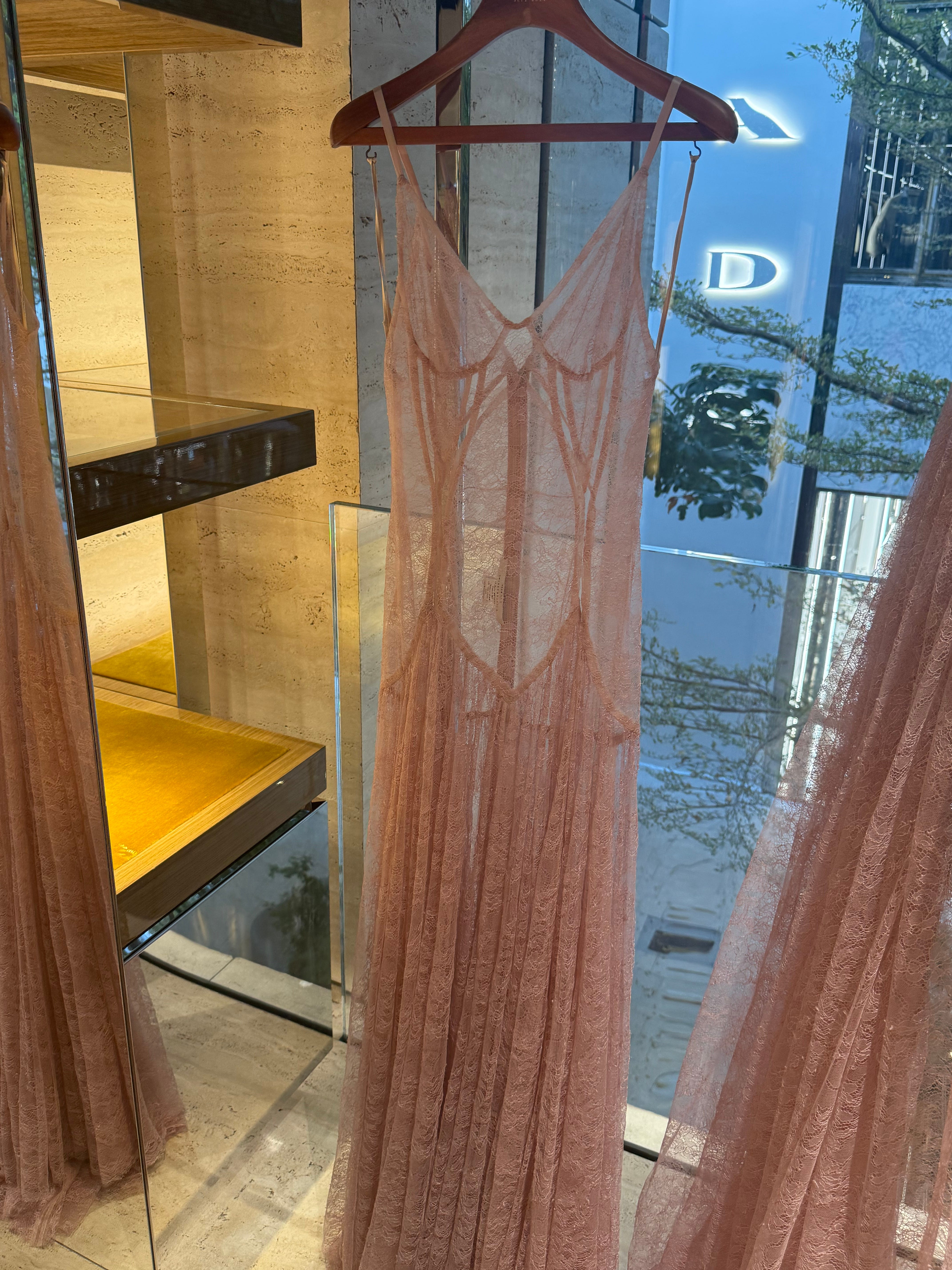
Couture pricing has always been extreme — the world of Alta Moda exists at a rarefied level - but the timing perfectly illustrates the realities of fashion Week today.
Fashion has always inspired aspiration. That’s part of its magic.
Beautiful objects. Craftsmanship. Imagination. Beautiful people participating and strutting.
But it raises an interesting question.
Who are the people buying dresses for $247,000?
Regardless of your tax bracket how do you justify a price tag like that?
I honestly don’t think most of these pieces are meant to be purchased in the way we imagine.
So what is all of this actually for?
Is it performance? Is it to build hype? Is it to trigger our anxieties and desires?
If you really think about it, a different approach would almost feel more like true luxury.
Imagine no cameras. No PR. No influencer amplification.
Just hosting shows for the clients who shop with you year-round.
Invite the stylists and sales associates who actually understand their customers’ wardrobes.
Let those professionals introduce the collections directly to the people who buy them.
A few thousand people attend Paris Fashion week. But millions of us watch it unfold online in real time.
The same bags appear on multiple influencers- most of which were not actually purchased. The same shoes show up across dozens of posts. The same looks repeat across feeds.
And suddenly millions of people want the same things within hours. The algorithms have no consideration for personal preference or spend.
It simply amplifies whats new.
Part of the reason all of this hits the brain so hard is because several psychological triggers are happening at once.
First: novelty. New designs, new silhouettes, new creative directors. Our brains are wired to pay attention to what’s new.
Second: social proof. When you see the same item across multiple accounts, your brain registers it as important.
And third: scarcity. Fashion Week messaging always carries a subtle signal: these pieces are limited, the moment is now, and if you wait too long you might miss them.
Stack those three things together — novelty, social validation, and scarcity — and desire escalates very quickly.
Especially when the algorithm keeps repeating the same pieces across your screen.
I’ve also noticed influencers starting to talk more openly about the mechanics behind attending these shows.
They explain that they rarely get to wear exactly what they want. Brands style them. Seating charts matter. Certain pieces are pushed more than others.
Which makes sense.
Fashion Week isn’t just about fashion.
It’s also about distribution.
Certain items become the visual focus because they’re the pieces the industry plans to produce and sell at scale.
But here’s the part I keep thinking about.
What happens to us internally when we live inside a system that constantly accelerates desire? When are we going to end the fantasy and reality check what all this is.
Three days ago I felt satisfied and ready to work on my wardrobe.
Now suddenly I’m eager to spend and i’m salivating.
If I bought three of the bags I liked, the shoes, maybe a suit and a lace dress, I’d already be looking at a list pushing $50,000 — and that’s just extras.
What about the actual gaps in my wardrobe?
The basics I want to refresh?
The pieces that would make what I already own more wearable?
That contrast fascinates me.
Not because loving beautiful things is wrong — I love fashion and this is not my breakup — but it’s worth pointing out that when admiration and pressure start blending together we’re not at our best.
Who is helping me ask the import questions like:
Do I really want every new piece each season?
Or is this just admiration?
Sometimes the most powerful thing you can do after watching an incredible runway show is take a breath, close the app, and return to your own closet.
The algorithm will sort its self out in a few days.
All of this is to say — that I’m even more convinced than ever that we need technology that helps us experience fashion without losing ourselves inside the cycle of it.
I love your theme of slowing down and not having tech speed up things!! You are such a good writer!!! Cheering you everyday my friend!